Case Study - How I helped reshape how Europe’s largest bus network is planned - from the inside.
OneUI: From fragmented tools to one unified planning experience
UX Researcher → Senior Product Designer
Solo researcher → UX team of 2, working across 5 product teams
Network planning at Flixbus
2022 - 2025
Project Overview
Goal
Create a single planning experience where the most important tools appear in context, so planners can focus on network decisions, not on hunting for information or fixing version conflicts.
Problem
Network planners had to jump between 6+ disconnected tools, re-entering the same data, managing multiple versions, and holding critical details in their heads instead of in one reliable system.
Responsibilities
Planned and ran contextual studies with planners, defined personas and end‑to‑end flows, co-created the OneUI vision with product and engineering, designed key interfaces and integrations, and helped establish a UX team and design system practices in the domain.
My Role
Led UX research and product design across the Network Planning domain, from uncovering the fragmented workflow, to defining the OneUI concept, to shaping and validating the final integrated experience.
TL;DR
Stat #1
6 tools unified into 1 experience
Stat #2
13% reduction in time spent per line planning
Stat #3
23% of 164 NP tasks impacted by key feature improvements
Prefer watching?
The full story in 60 seconds

Network planners at Flix were quietly drowning in tool-switching - six or more disconnected products, excel macros, shared drives, and emails just to plan a single bus line. I mapped the full picture, proposed a unified UI concept no one believed in, watched a design sprint fail, built a prototype that changed the room, and spent the next four years turning that idea into a company-wide standard.
The Situation
When I joined the Network Planning domain in 2020, the main planning tool handled timetables, bus rotations, driver models, and publishing. Solid on paper. But zoom out, and a different picture emerged.
Planners were also living in PowerBI dashboards, macro-heavy Excel files, profitability calculators, legal compliance checkers, and in-house scheduling tools, all running in parallel, all disconnected. Versions lived on personal laptops, shared drives, and inside the planning tool simultaneously. Nobody could confidently say which was “the latest.”
The problem wasn’t that any single tool was bad. The problem was that no one had ever looked at the whole picture.
Each product team had built their tool in its own bubble. The result was a fragmented workflow that had become invisible because planners had never seen anything different.
Design research
Humans we were designing for

Junior Network Planner
Relying on seniors for onboarding
Goals
Onboard as soon as possible inorder to support senior and start planning network.
Frustrations
I have too many documents to read, videos to watch. Don't know which tool to use when. Depend on seniors availability to learn.


Existing user journey

Painpoints
Fragmented User Journey
Timetables, profitability, legal checks, and optimisation all lived in separate tools, forcing planners to stitch together one workflow from many disconnected products.
Tool Switching
Planners repeatedly re‑entered the same data across dashboards, excel files, and internal tools while juggling local files, shared drives, and tool versions, never fully sure which schedule was the latest.
Onboarding Complexity
New planners had to learn the domain and six different tools, in the right order, before they could contribute, which slowed ramp‑up time and relied heavily on experienced colleagues’ memory.
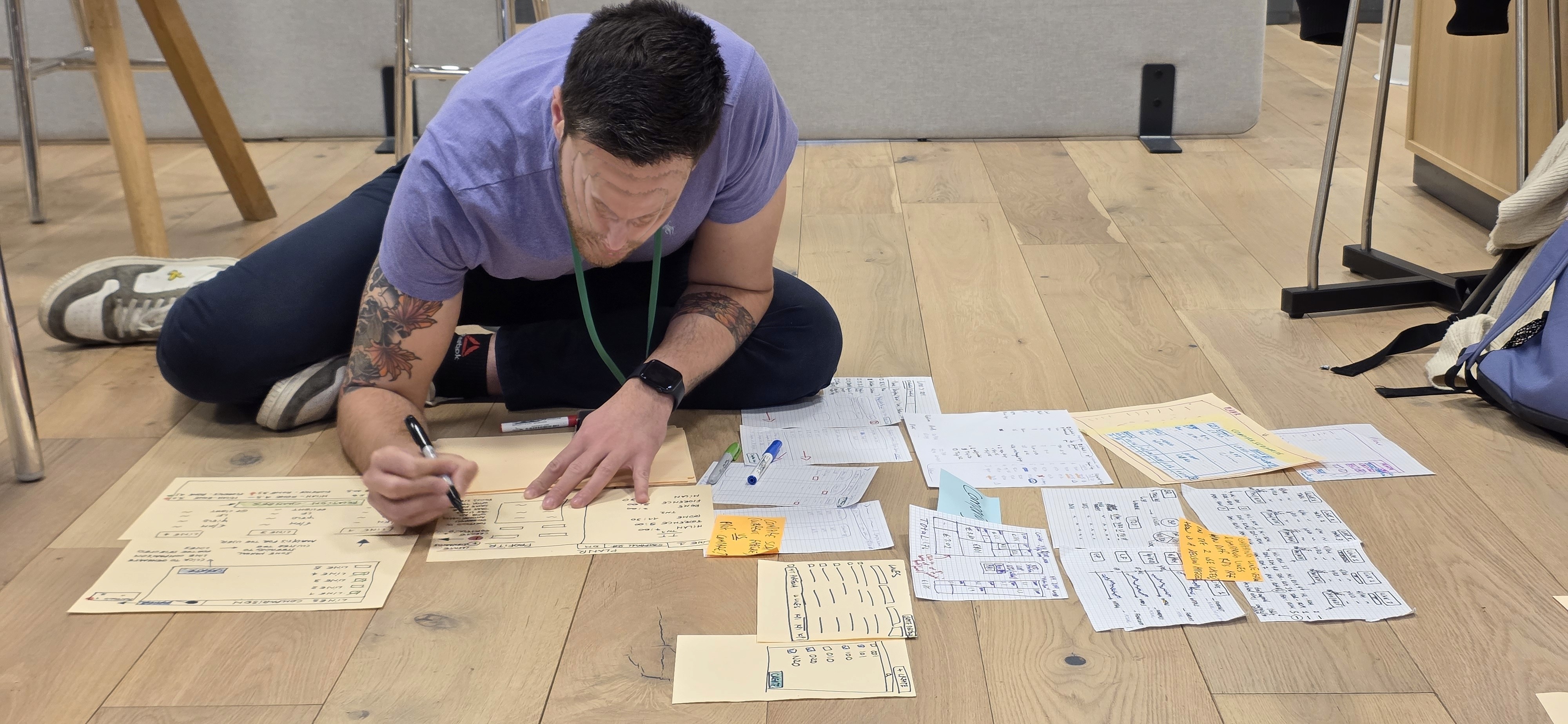
Ideation, wireframes and prototypes
<— Drag to see sketches and prototype —>
Outcome
01
6 tools unified into 1 experience
Instead of switching tools, remembering information, network planners can stay in the same context and access relevant information and continue planning.
02
13% reduction in time spent per line planning
Less switching, less time spent on learning tools meaning, more time on actually planning lines.
03
Internal Design System
We also extended the company’s passenger-focused design system with custom components for complex internal workflows and onboarded domain frontend teams to share code, accelerating development and fostering reuse.
High fiedlity prototype
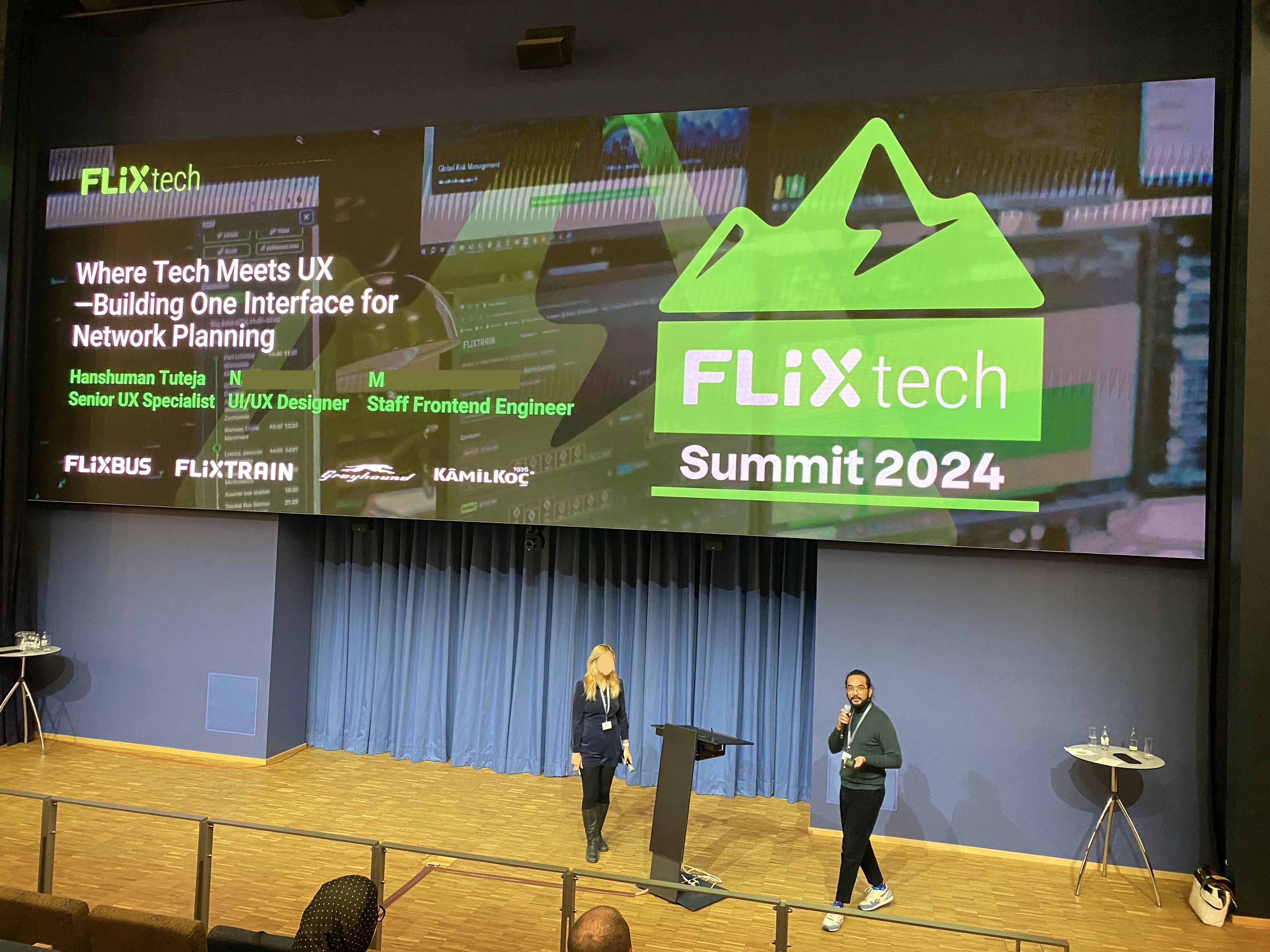
Information edited due to NDA
Delivered a unified web interface where planners access all tools: route planner, profitability calculator, and optimisation engine: through contextual tabs that share data (stops, dates, routes) without re-entry. Integrated an operations-research algorithm for schedule optimisation, displaying before-and-after comparisons with clear visual highlights of changes.