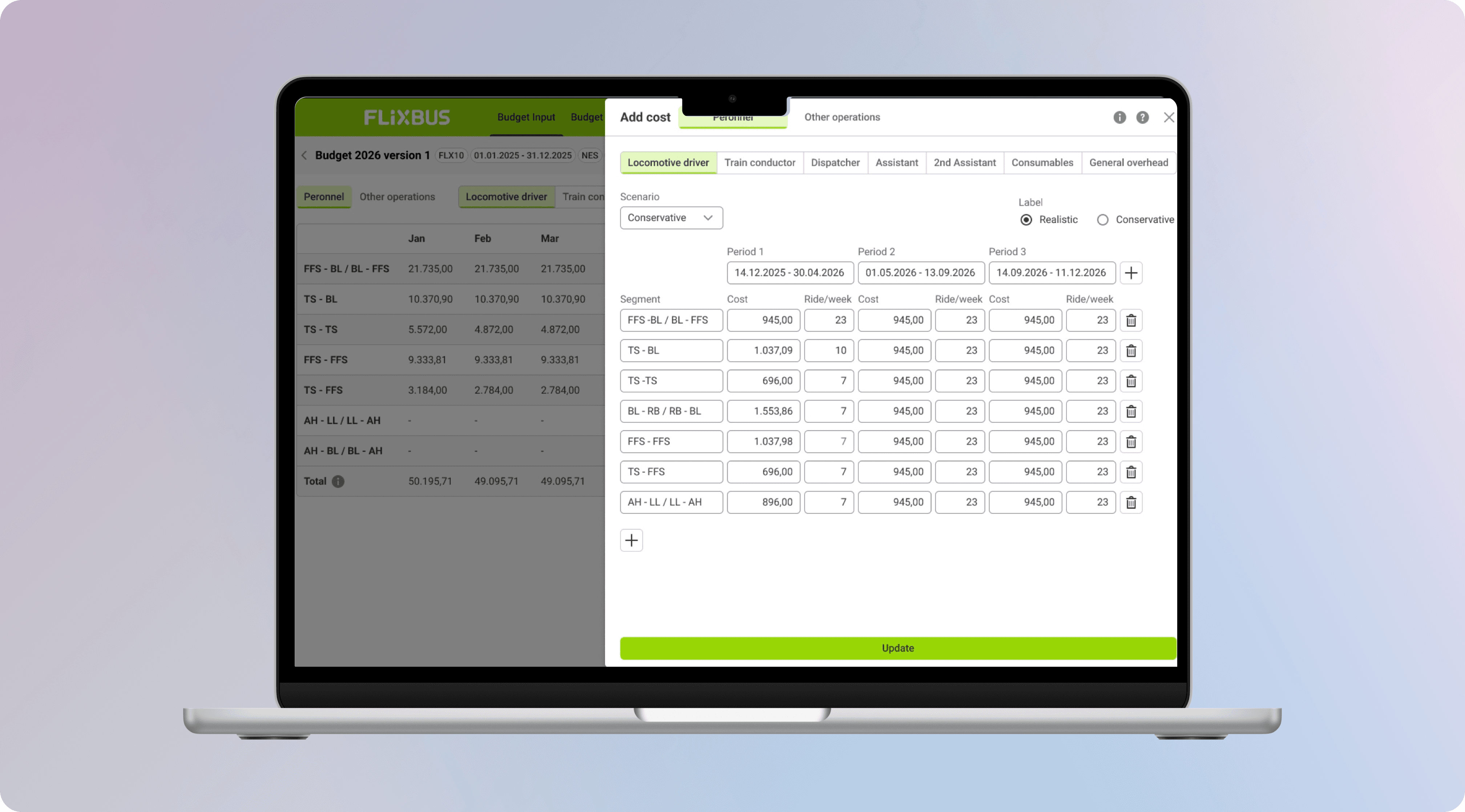
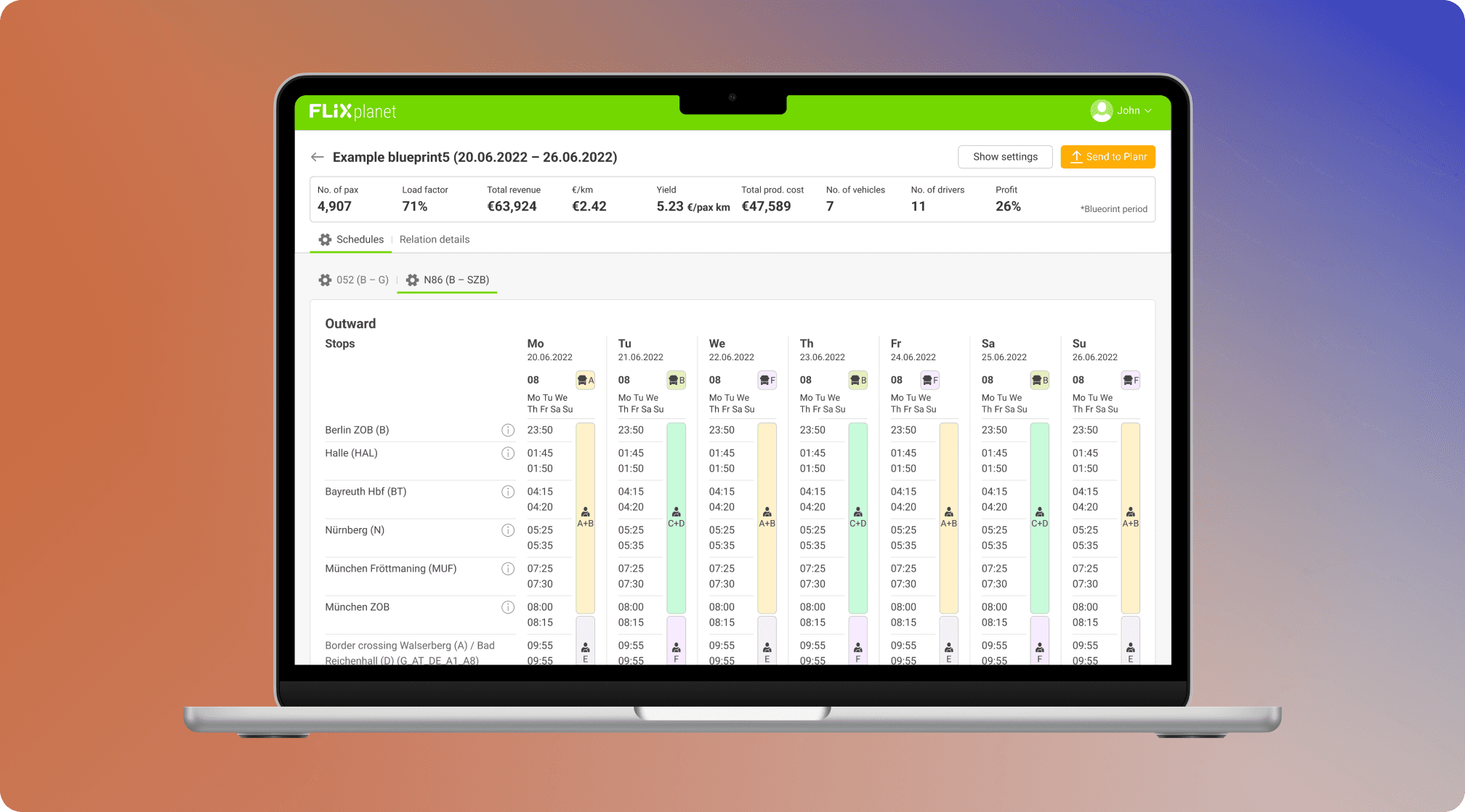
Case Study - How I helped reshape Europe’s largest bus network is planned - from the inside.
Design Research

TIMELINE
3 years (2023 - 2025)
TEAM
2 designers + 5 POs + domain tech and product lead
COMPANY
Network planning domain at FlixBus
USERS
70+
TWO STORIES IN ONE: Unifying six planning tools into OneUI - and founding the design function that made it possible: the team, the rituals, and a domain-level model that other Flix domains later adopted.
Project Overview
My Role: Senior Product Designer
I held a Senior title but operated at Staff level - leading design across 5 product teams at domain level.
I owned
UX strategy • Design research • End-to-end UI design • Design operations
With the team
5 product teams: feature input • Engineering: feasibility & implementation • PO: roadmap & scope • UI designer: co-driver
Goal
Create a single planning experience where the most important tools appear in context, so network planners (users) can focus on network decisions, not on hunting for information or fixing version conflicts.
Problem
Network planners had to jump between 6+ disconnected tools, re-entering the same data, managing multiple versions, and holding critical details in their heads instead of in one reliable system.
TL;DR
Stat #1
Stat #2
Stat #3
Network planners at Flix were quietly drowning in tool-switching - six or more disconnected products, excel macros, shared drives, and emails just to plan a single bus line. I mapped the full picture, proposed a unified UI concept no one believed in, watched a design sprint fail, built a prototype that changed the room, and spent the following years turning that idea into a company-wide standard.
Design on domain level
Before this project, no designer at Flixbus had ever held a cross-team, domain-level UX role. The structure didn't exist. We built it from scratch.
A new design model
We established a two-layer structure: one designer embedded in the domain focusing on UX strategy, vision, cross-team consistency) and one working on UI delivery, iteration.
Cross-team rituals
Monthly design syncs across all 5 product teams. Shared critique sessions. A living design system instead of per-team component libraries.
Design with a mandate
For the first time, UX had a seat at the domain roadmap table - not just being consulted on features, but contributing to what got built and why.
A model others copied
Within 18 months, other Flix domains had adopted the same structure — one or two designers working across a whole domain, the way we'd set it up.
The Situation
A fragmented workflow hiding in plain sight
I first flagged this in 2020, but spent my early years delivering what the business asked for before I earned the mandate to redesign in 2023. The main planning tool handled timetables, bus rotations, driver models, and publishing. Solid on paper. But zoom out, and a different picture emerged.
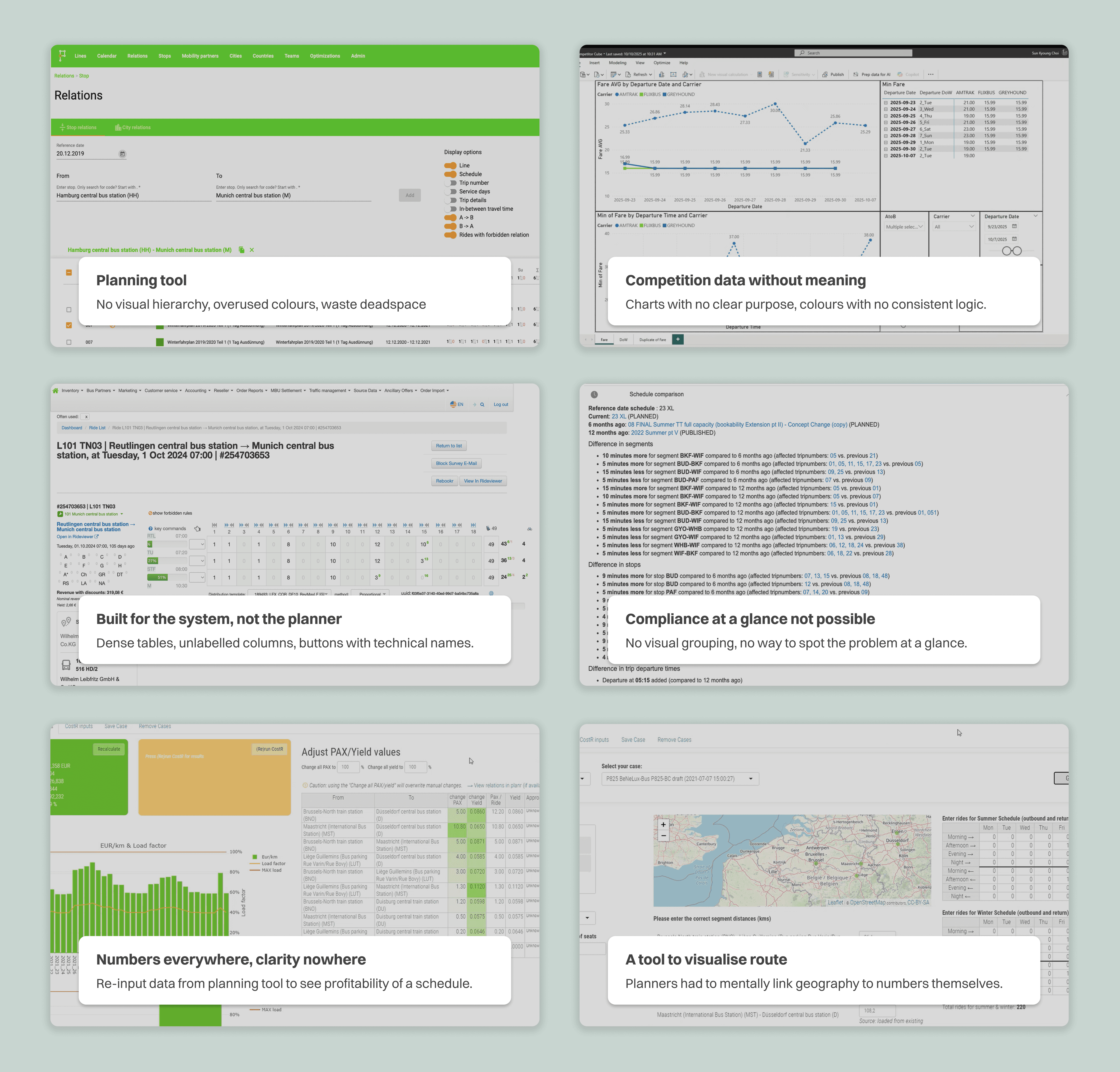
Planners were also living in PowerBI dashboards, macro-heavy Excel files, profitability calculators, legal compliance checkers, and in-house scheduling tools, all running in parallel, all disconnected.
6 disconnected tools
Timetables, rotations, driver models, compliance - all in separate apps with no shared data.
No single source of truth
Versions lived on laptops, shared drives, and inside the planning tool simulataneously.
Invisible to the teams
Each product team built in a silo. Nobody had ever seen the full user journey end-to-end.
The organisational design gap
5 product teams. Each owned a feature. Nobody owned the flow. There was no shared language, no shared lens - and no one whose job it was to see the system as a whole.
This created 2 intertwined problems that became inseparable to solve:
A fragmented UI
Users were context-switching across 6 tools daily, with no consistent patterns, navigation, or language.
No design coverage
UX had no structural model for seeing across the domain. Design was reactive, not systemic.
Design research
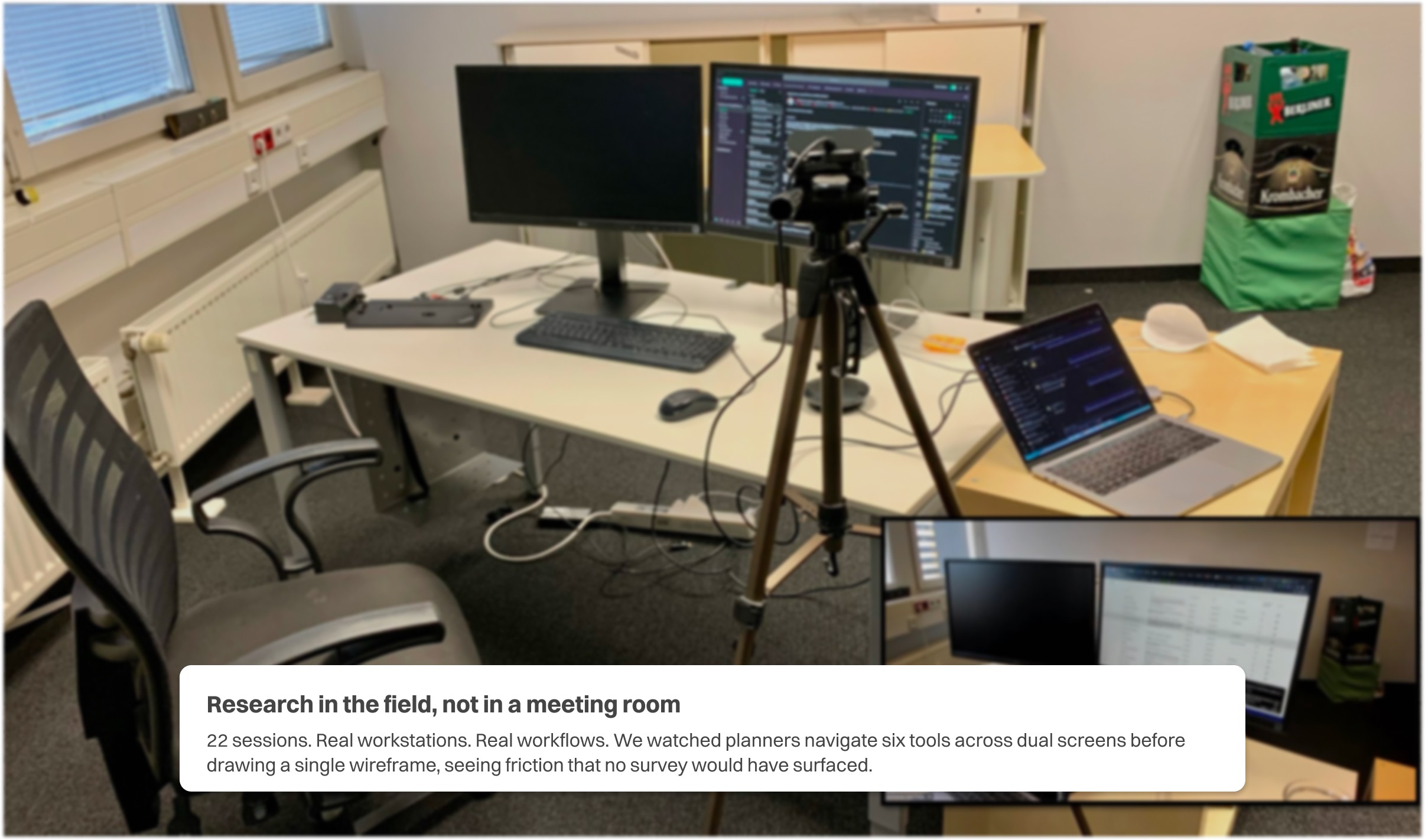
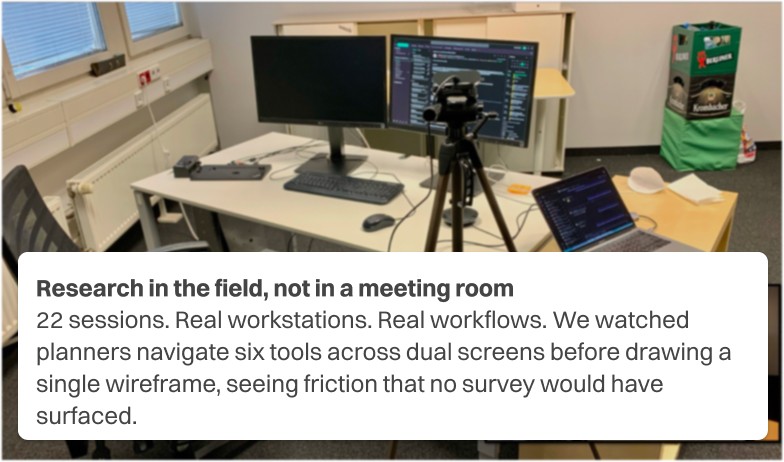
Before any pixel was drawn, I spent 3 months mapping what planners actually do - not what product teams thought they did.
Journey mapping
Mapped the full planning workflow across all six tools, revealing more than dozen hand-off points where data was lost or duplicated.
Contextual interviews
Ran 22 interviews with planners across different regions - watching them work, not just asking about it.
Heuristic audits
Audited all six tools with a shared rubric, identifying 60+ UI inconsistencies across navigation, forms and feedback patterns.
The insight that changed everything
Planners weren’t struggling with any single tool. They were struggling with the invisible space between them. The dozen moments where data had to be manually carried from one tool to the next. That became our design target.
The hard conversation
Six months of research told me something nobody asked me to say: five well-built products were adding up to one broken experience.
6-10
tools touched for one planning decision
30-40%
of a planner’s time lost to data wrangling
~20k
manual hand-offs a year
“We already have so many screens, so many tabs open every day to make one single decision.”
— Network planner, research interview
01 / THE RESISTANCE
The PO of the main tool saw no reason to absorb everyone else’s.
02 / THE MISREAD
The tech lead feared one team would own every release. I never said that.
03 / THE UNLOCK
Teams stay independent. Widgets just look the same. The seams disappear.
Once that landed, the fear left the room. I built prototypes so people could see it, not imagine it. After that it was easy.
The interface was the simple part. The real design work was the conversation that made it possible.
Outcome
Impact
Three results that mattered - to planners, to product teams, and to the company.
01
6 tools unified into 1 experience
Instead of switching tools, remembering information, network planners can stay in the same context and access relevant information and continue planning.
02
13% reduction in time spent per line planning
Less switching and less time learning tools means more time actually planning lines.
03
Cultural shift towards holistic thinking
One UI proved that it works and this sparked new ideas all the way from business to engineering. Product teams were thinking less in product boundaries and more in end-to-end Network Planning flow.
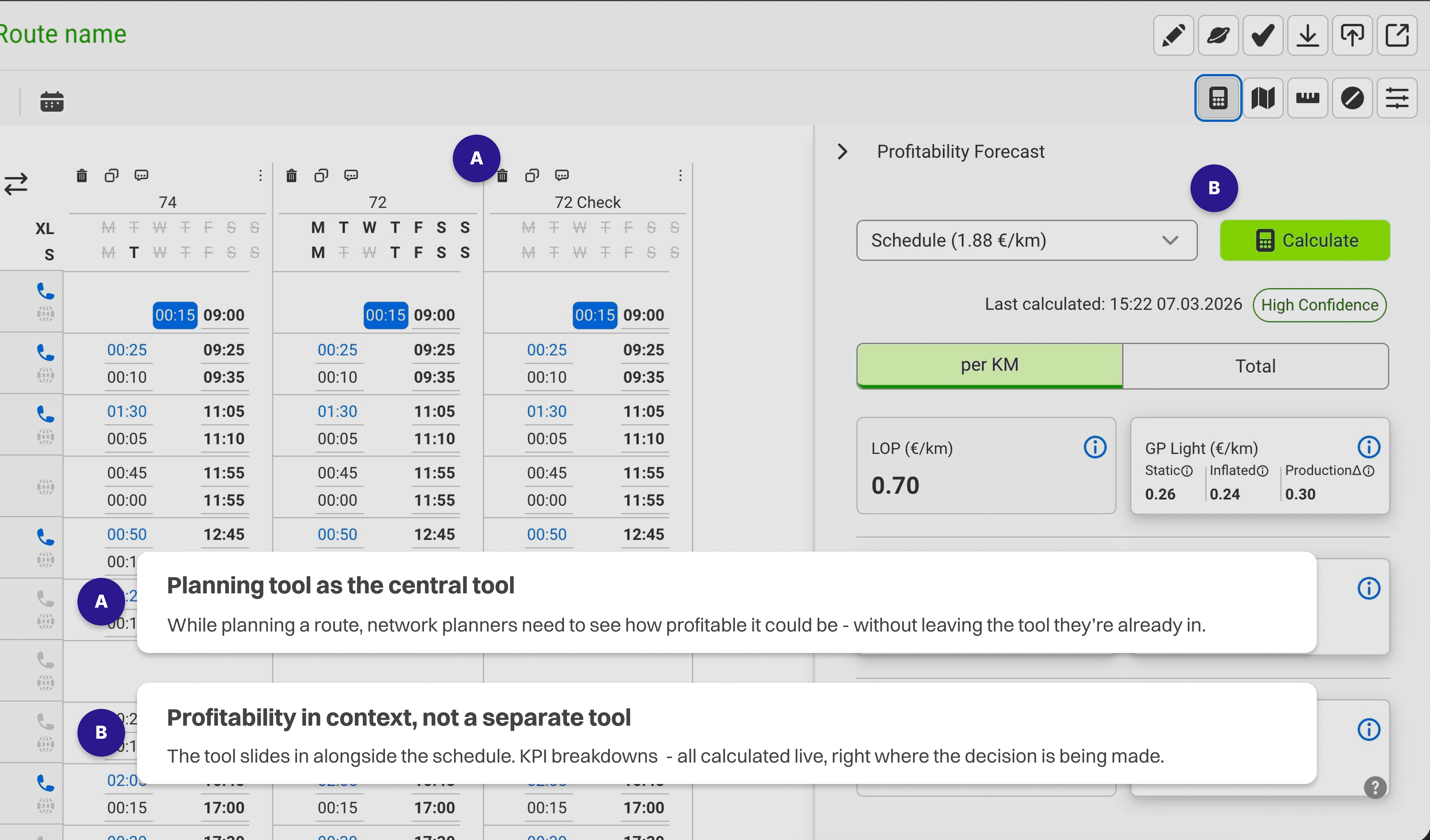
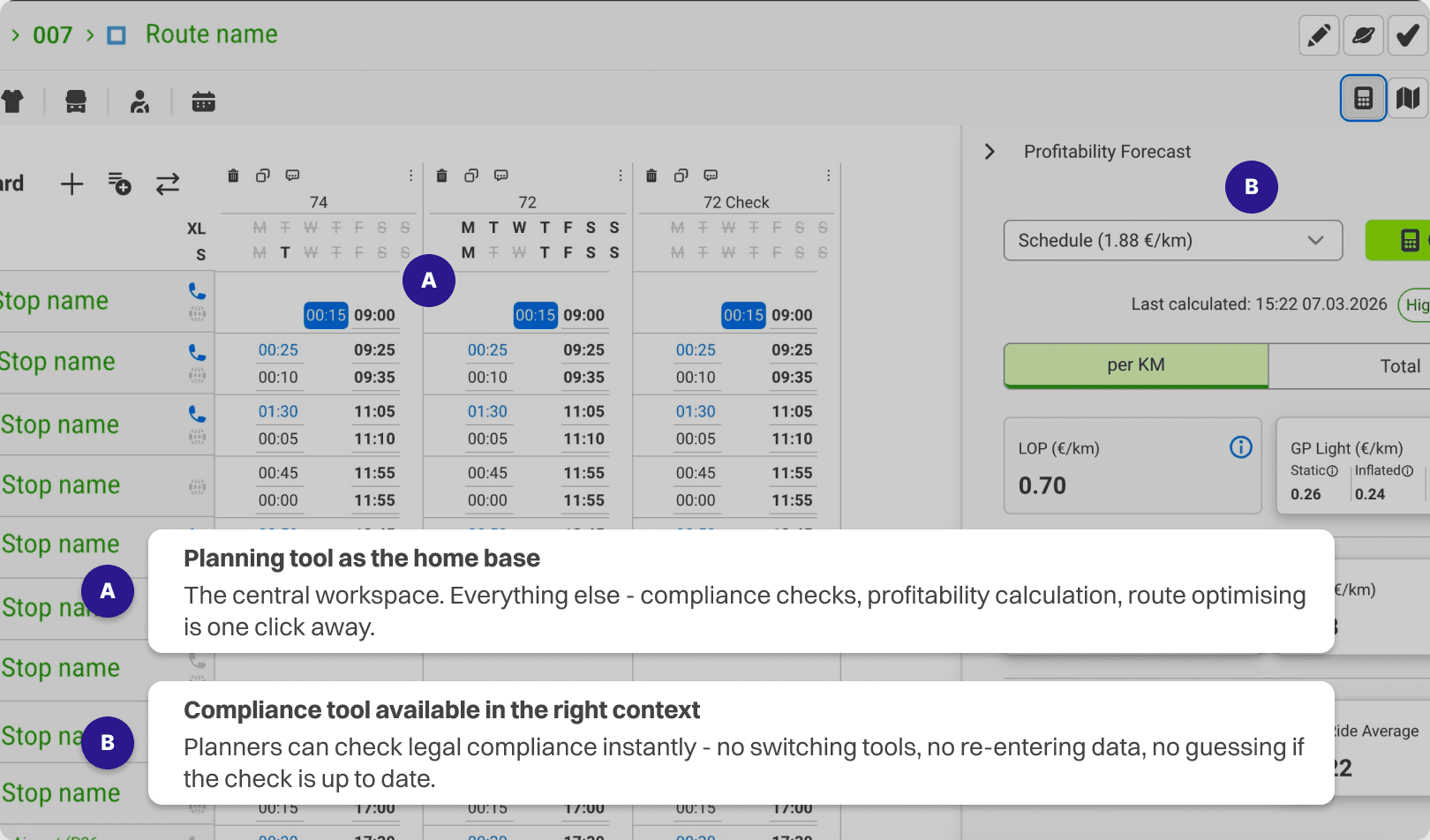
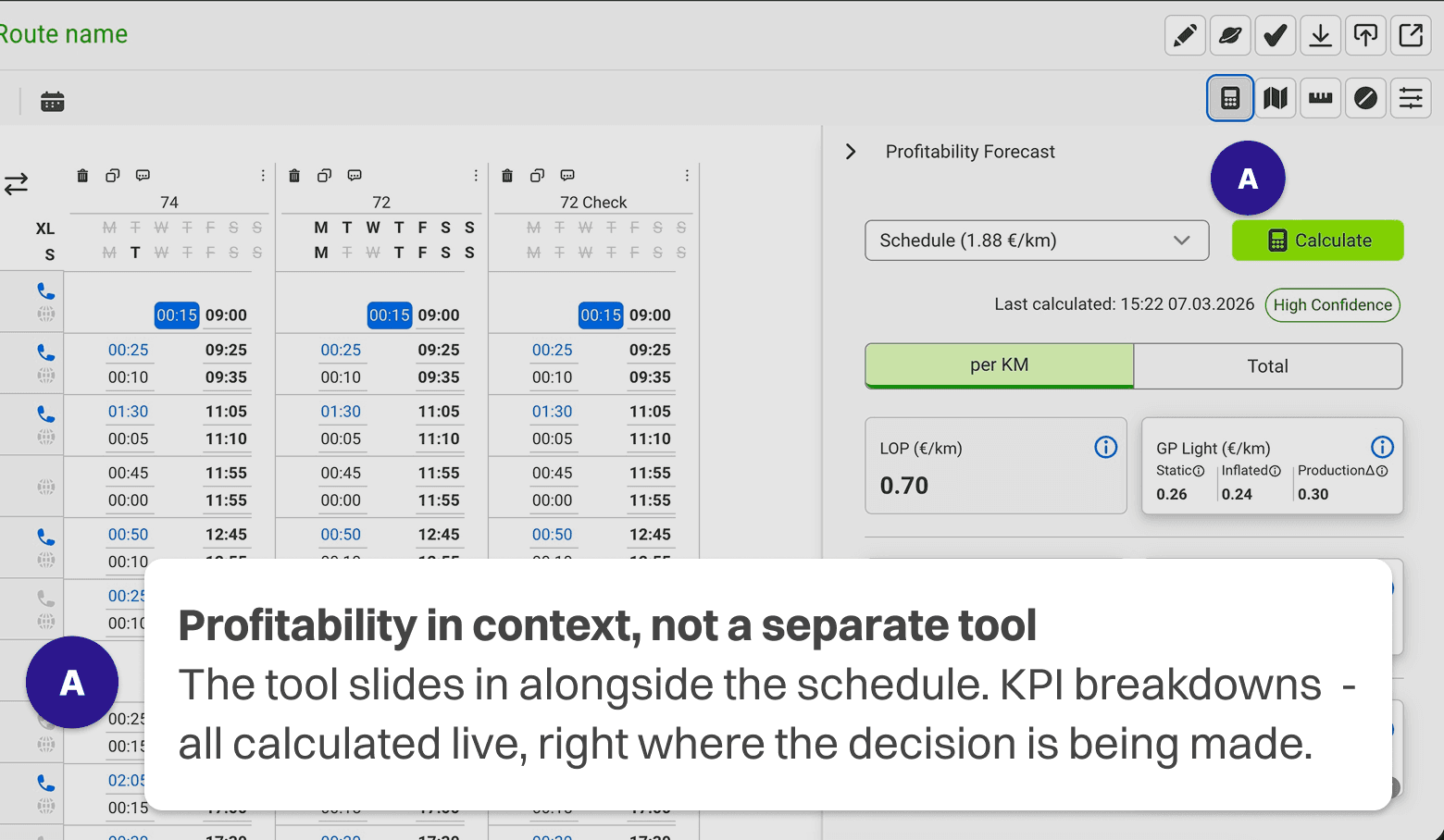
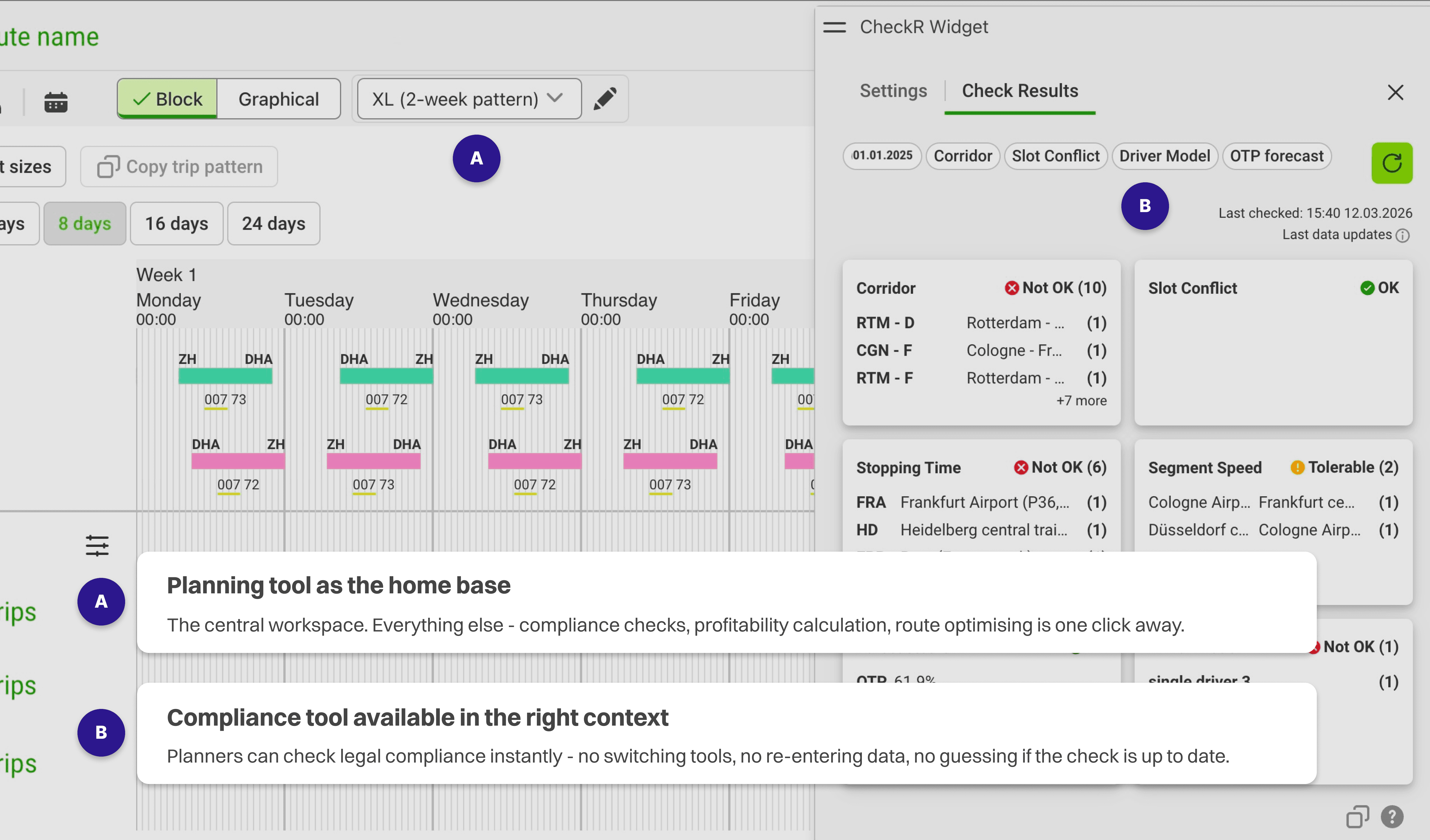
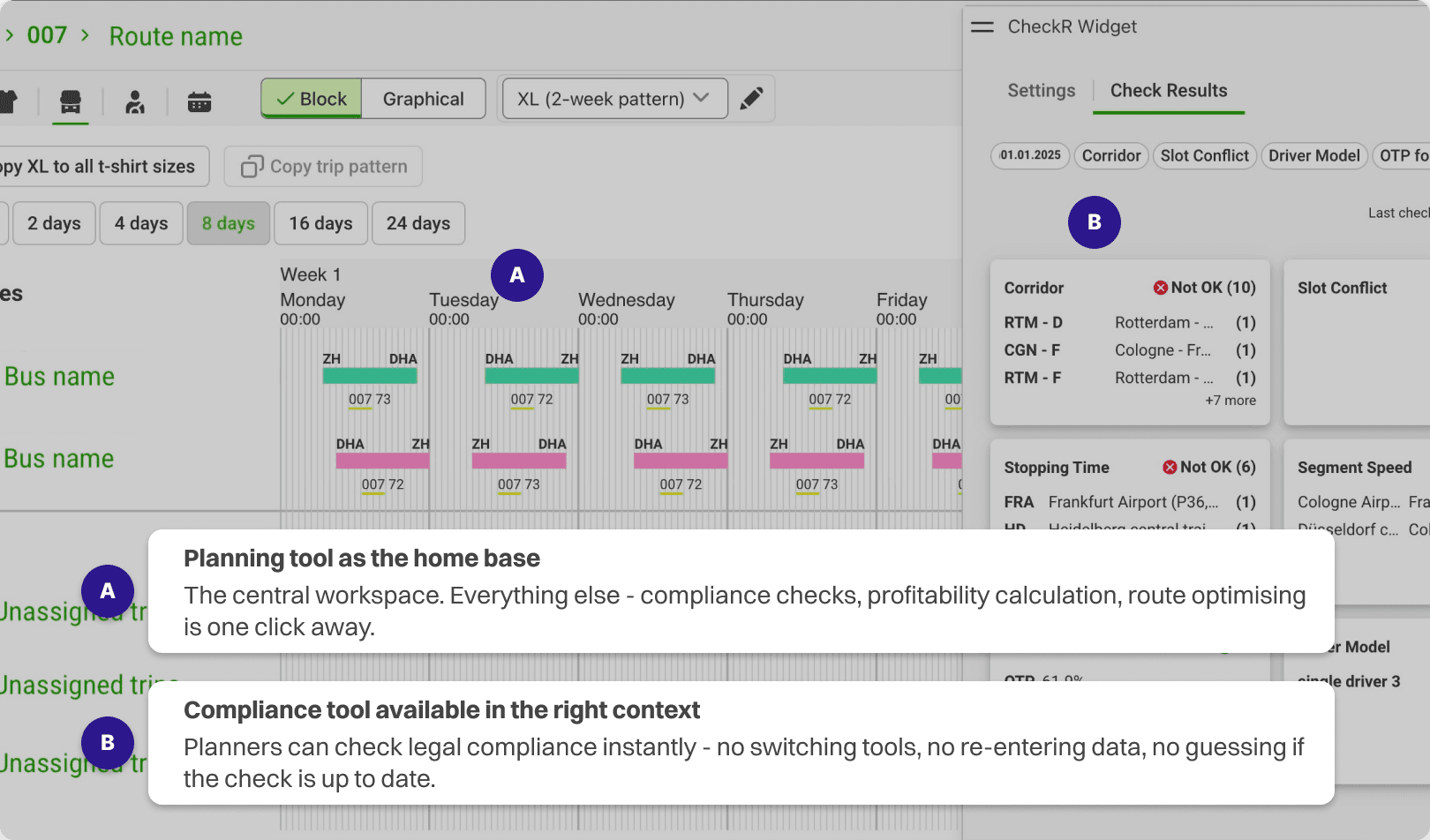
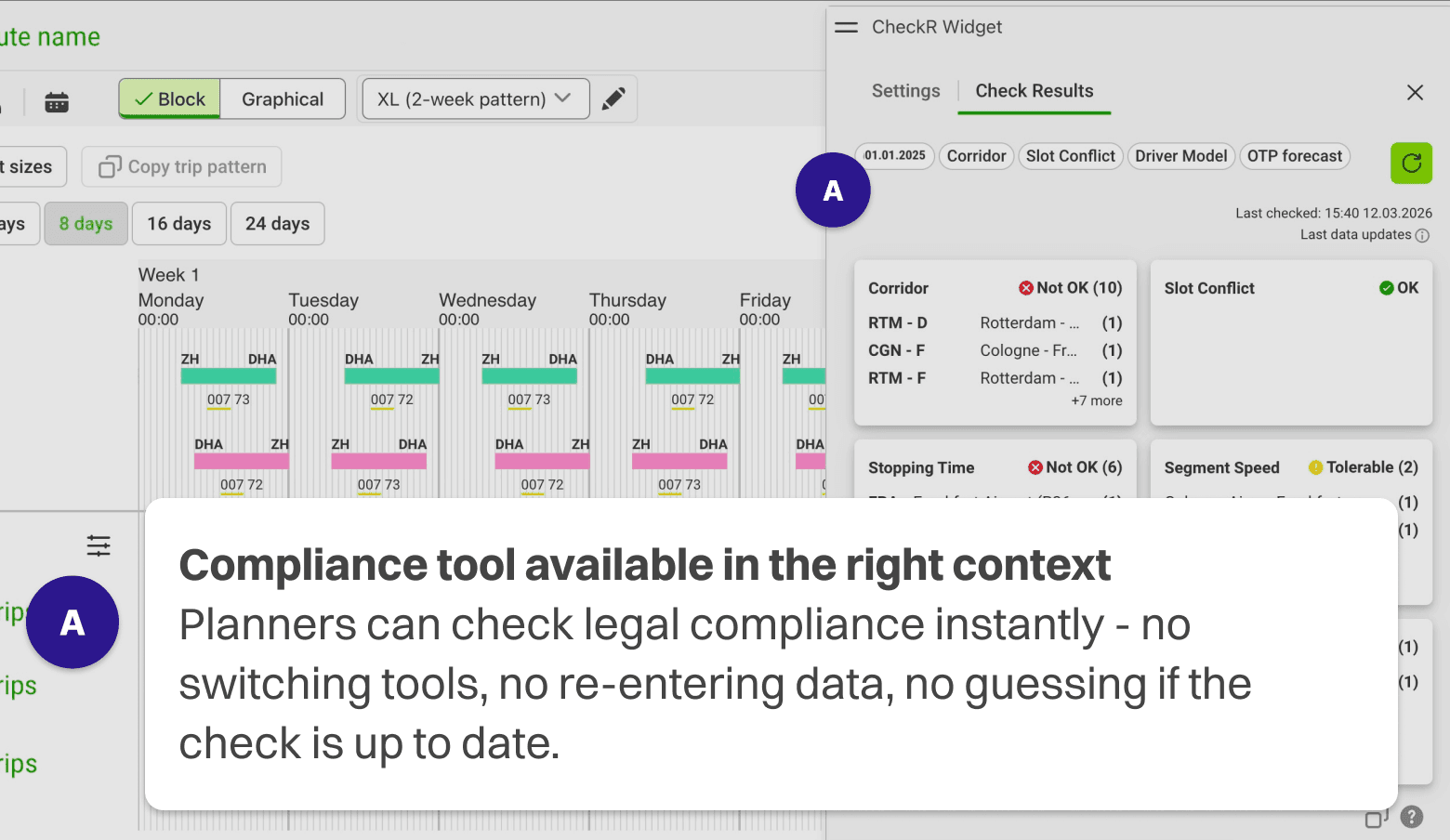
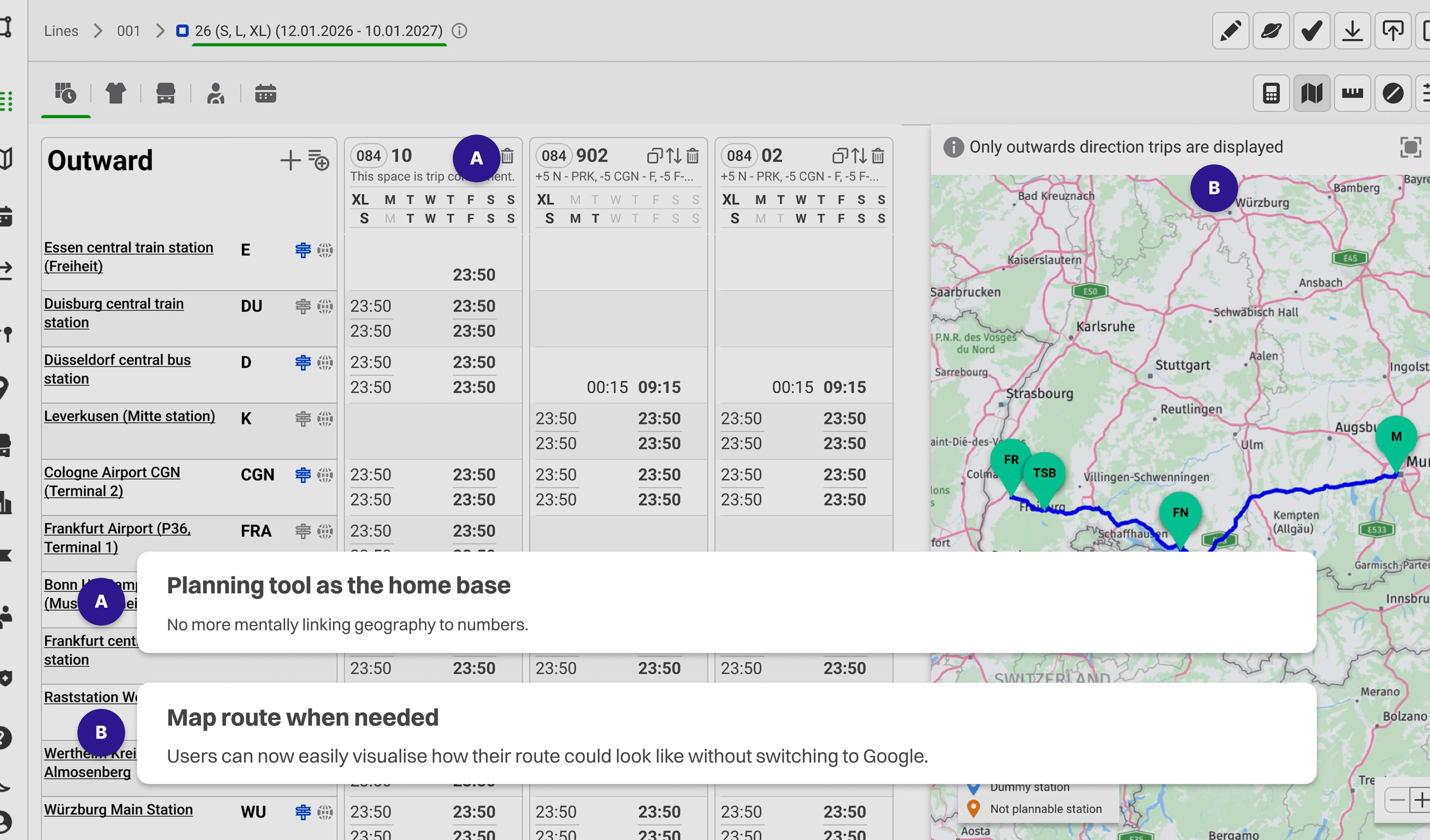
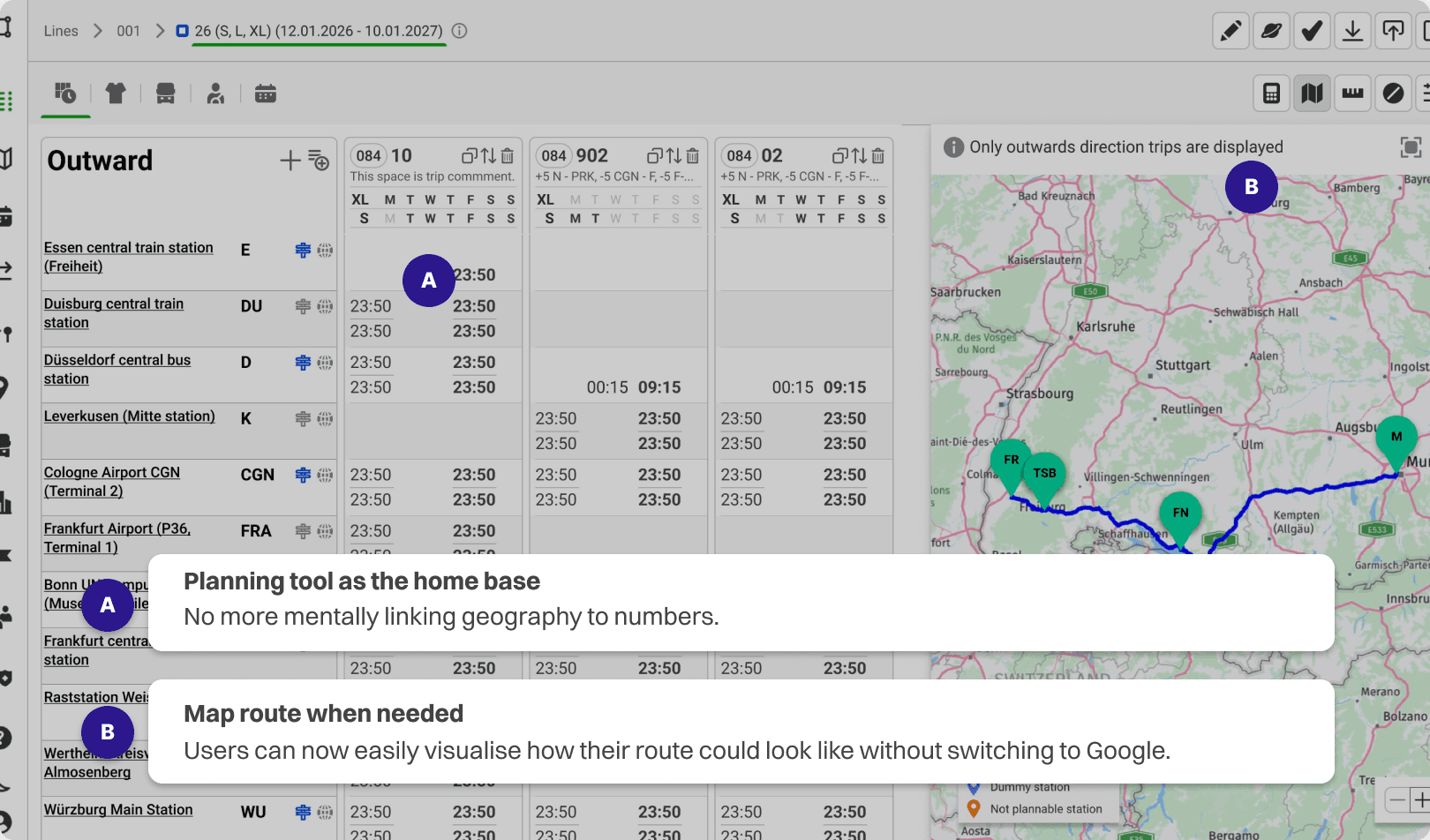
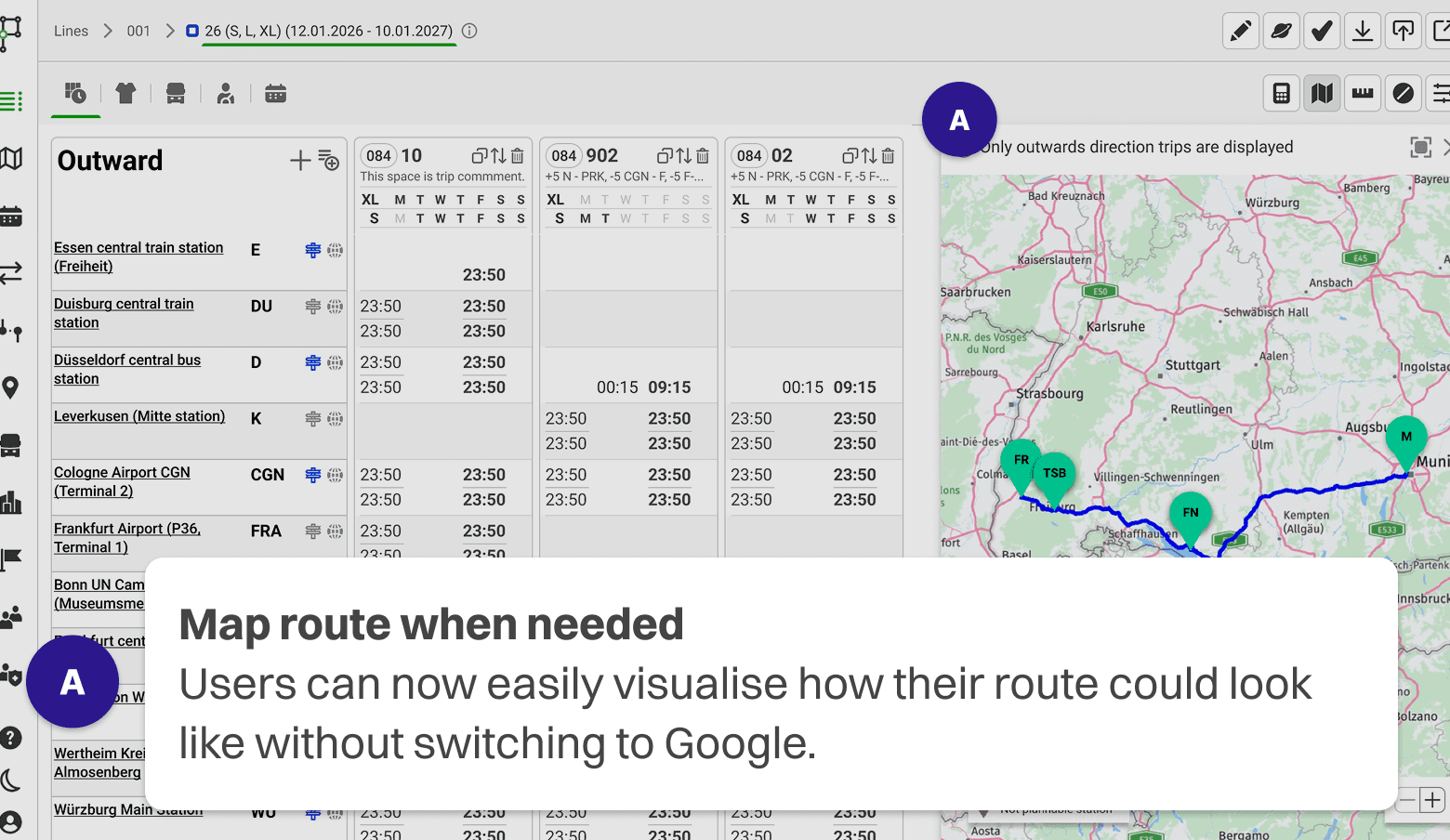
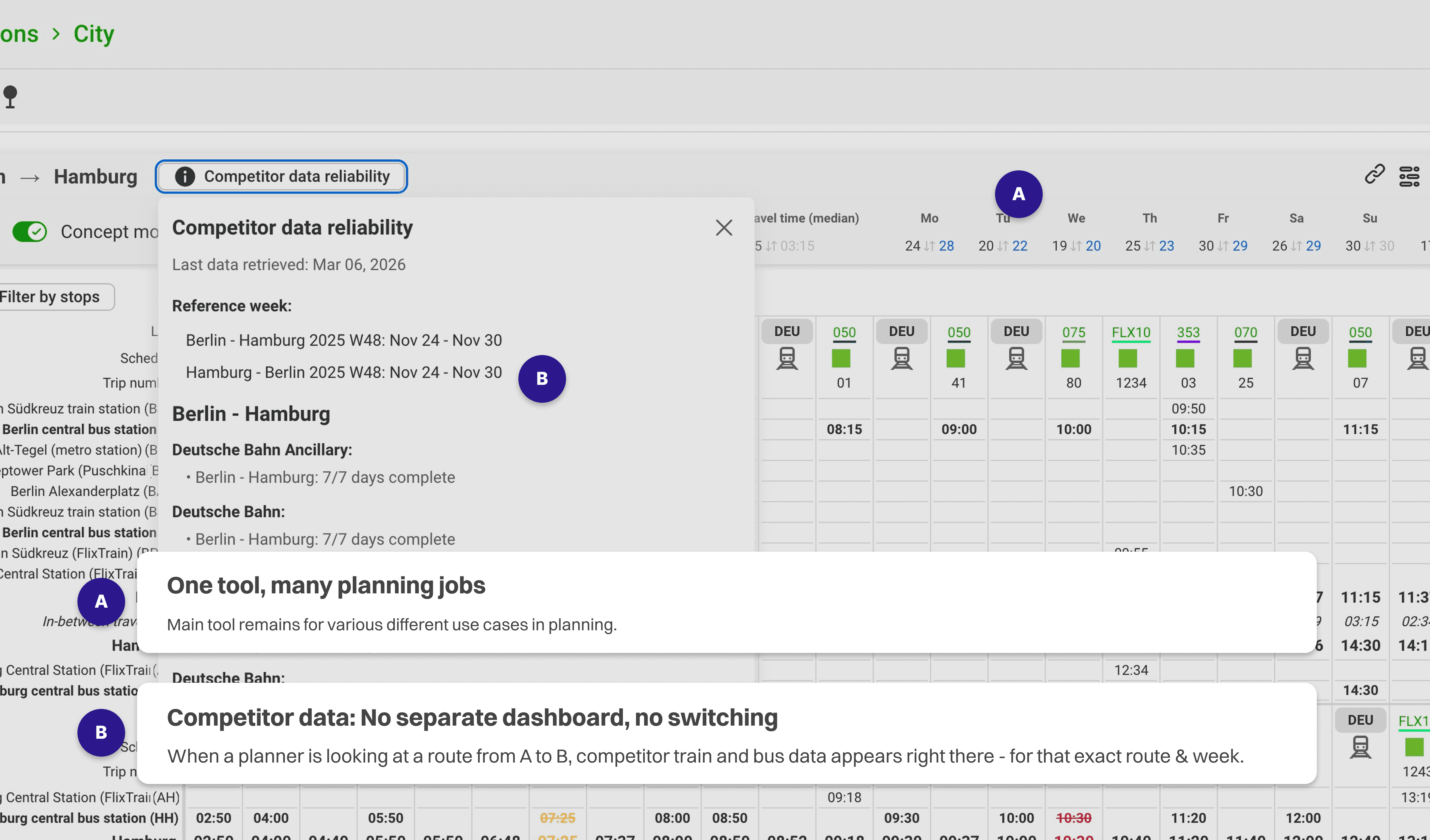
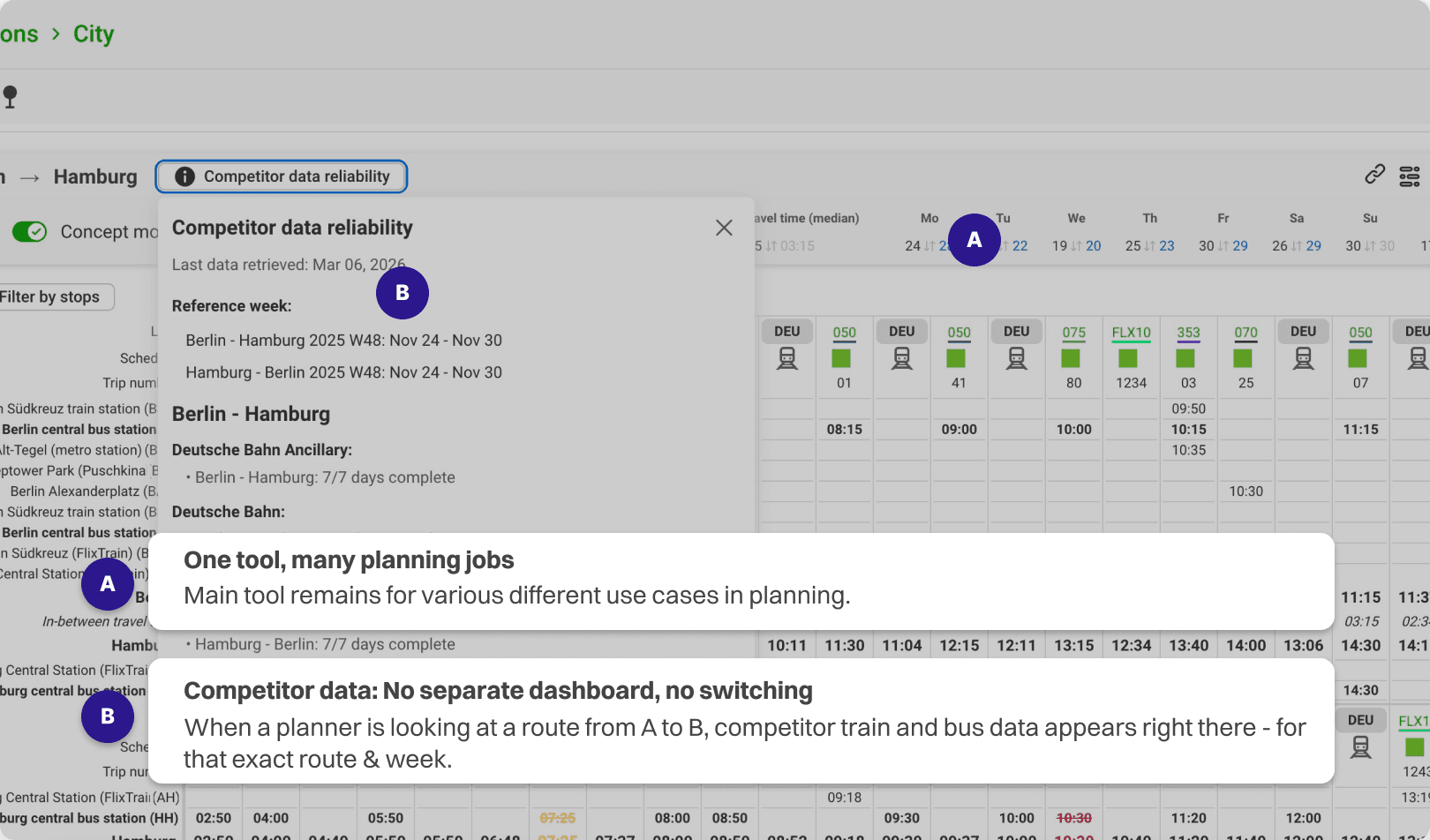
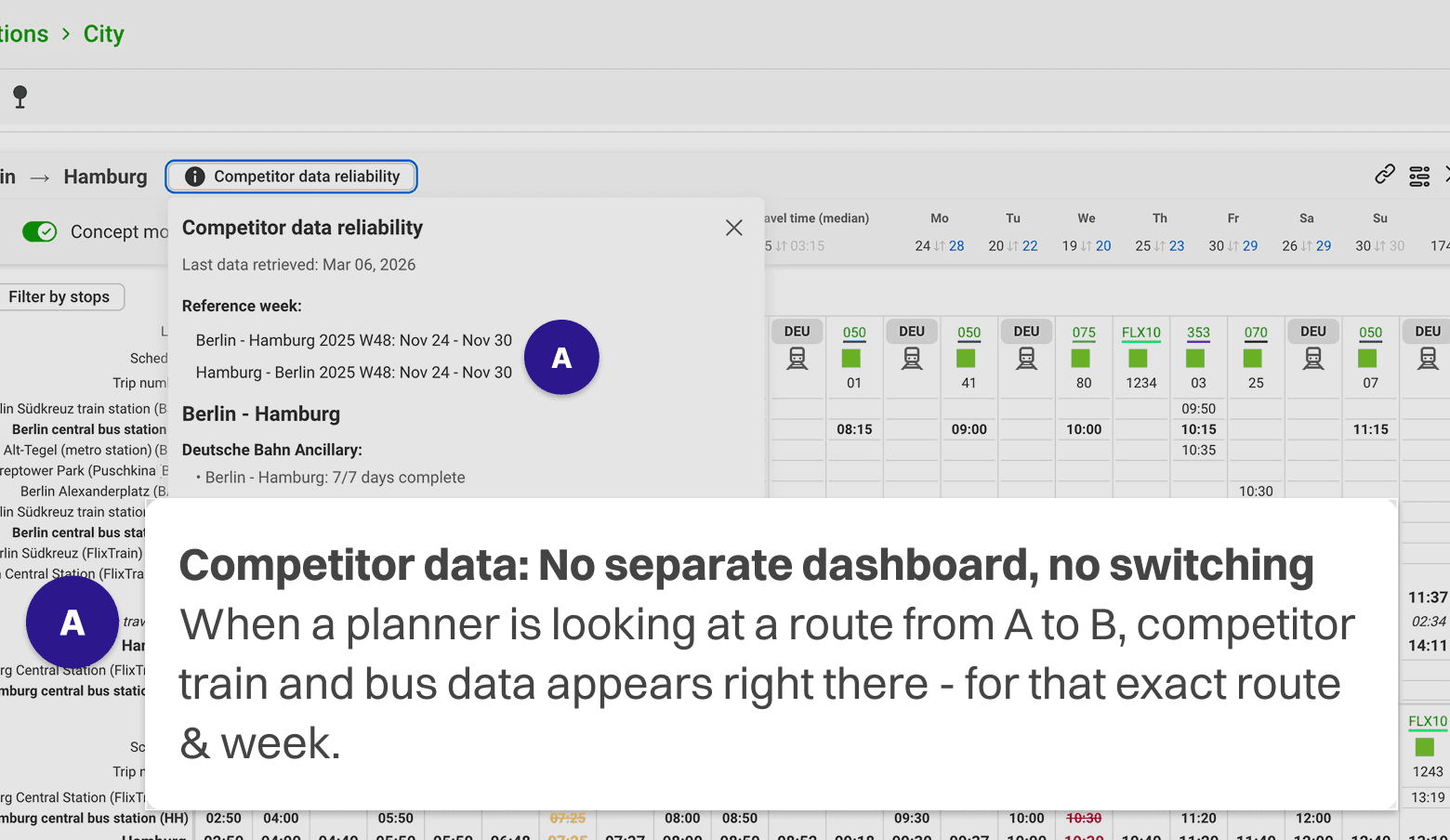
Delivered a unified web interface where planners access all tools: route planner, profitability calculator, and optimisation engine: through contextual tabs that share data (stops, dates, routes) without re-entry. Integrated an operations-research algorithm for schedule optimisation, displaying before-and-after comparisons with clear visual highlights of changes.
UI showcase: Before
Some information have been altered to not disclose any private content.
UI showcase: After
Some information have been altered to not disclose any private content.
What I'd take forward
01
Influence before authority
Nobody reported to me. That meant every idea had to be good enough to convince people, not just presented by someone senior enough to push it through.
02
Visibility is the hardest design problem
The biggest obstacle wasn't the UI - it was making the full user journey visible to people who'd only ever seen their own slice of it.
03
DesignOps is a design problem too
Structuring how design works across a domain is itself a design challenge. It needs the same rigour - research, iteration, rituals, feedback loops.